‘Artefacts from Memory in Three Acts’ was an opportunity to interrogate, ask questions about, and decolonize the problematic depictions of the world in the family outdated encyclopaedias, and my lived experience of growing up in 1970-80’s suburban Britain.
Artefacts from Memory in Three Acts:
*The carpet
*The cup
*The Curtain
Where did these objects come from and what did they tell me about the world then? What do they tell me now? Are they problematic artefacts? How can an artistic practice re-evaluate and re-locate them? The cup, a souvenir from my parents’ honeymoon to Amsterdam in 1973 six months before I was born. The carpet, a rug with Indian or Chinese motifs and a curtain that allowed you ‘to see outside onto the cul-de-sac but not allowing the outside world to peer in’ (Neil, 2020). What legacies do these objects hold, what stories of society, culture and time do they represent? what challenges can I now bring? Through my artistic practice can I re-imagine/contextualise these objects/spaces/artifacts/soft furnishing and the taste/ideologies they represent?
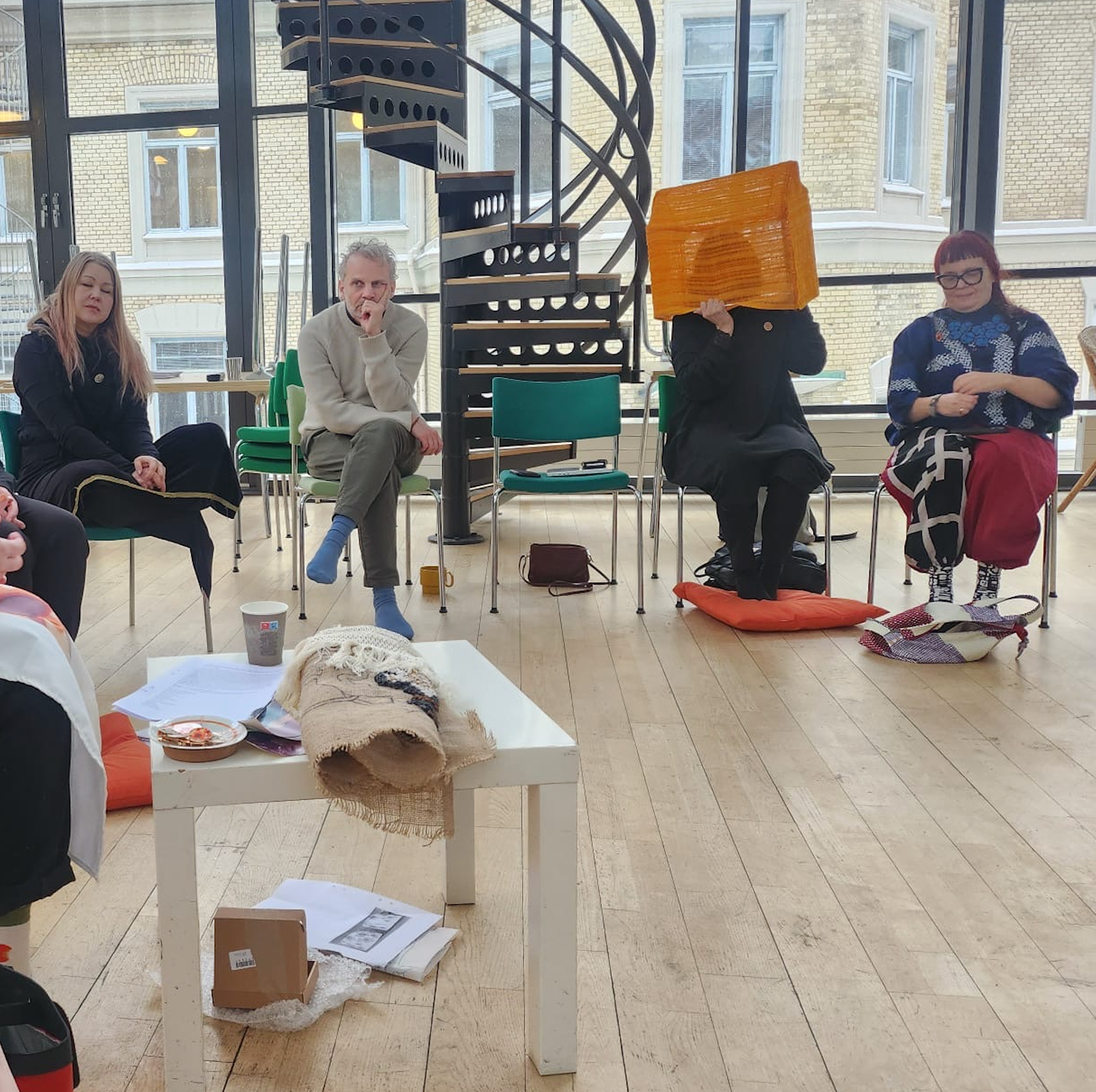
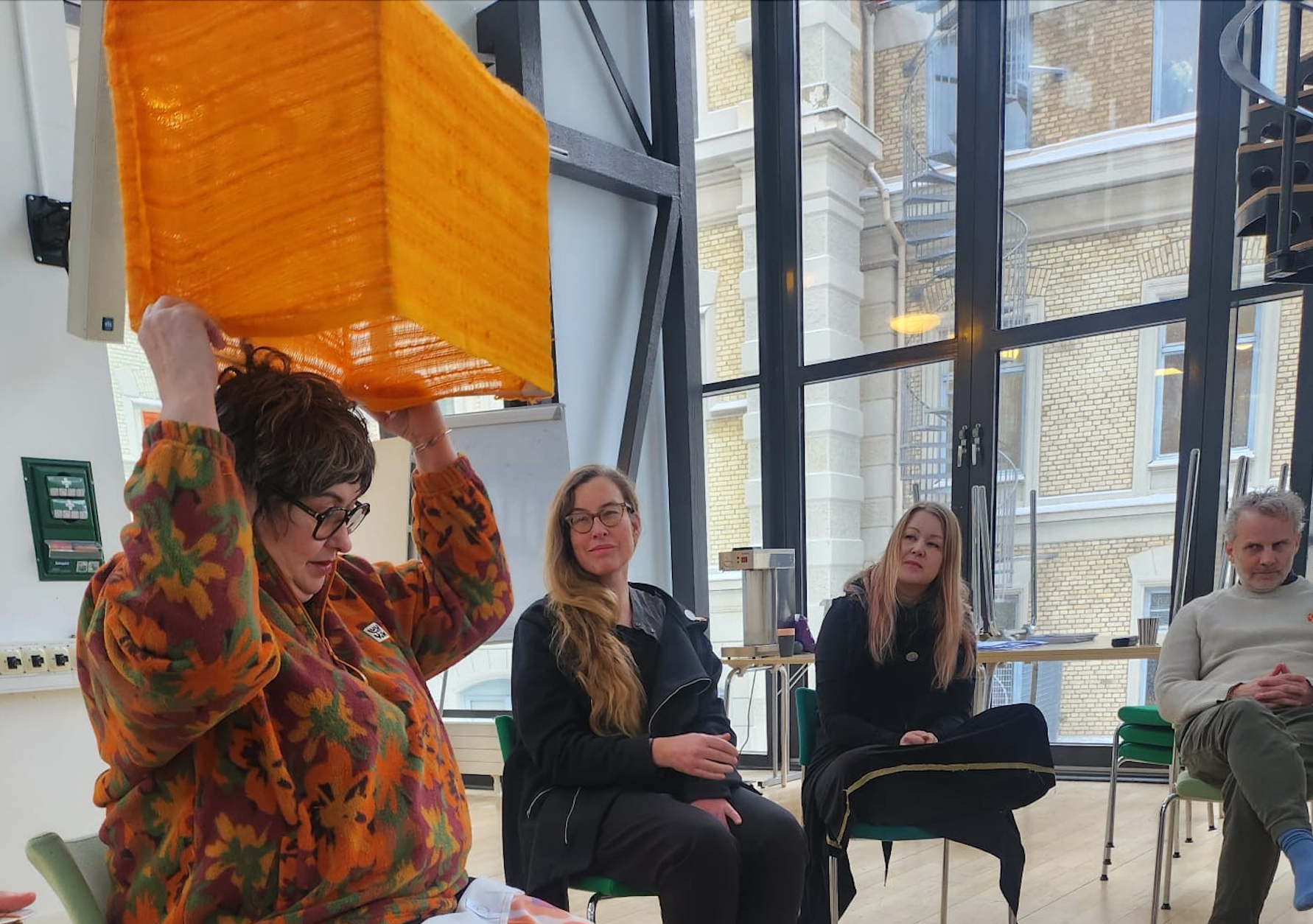
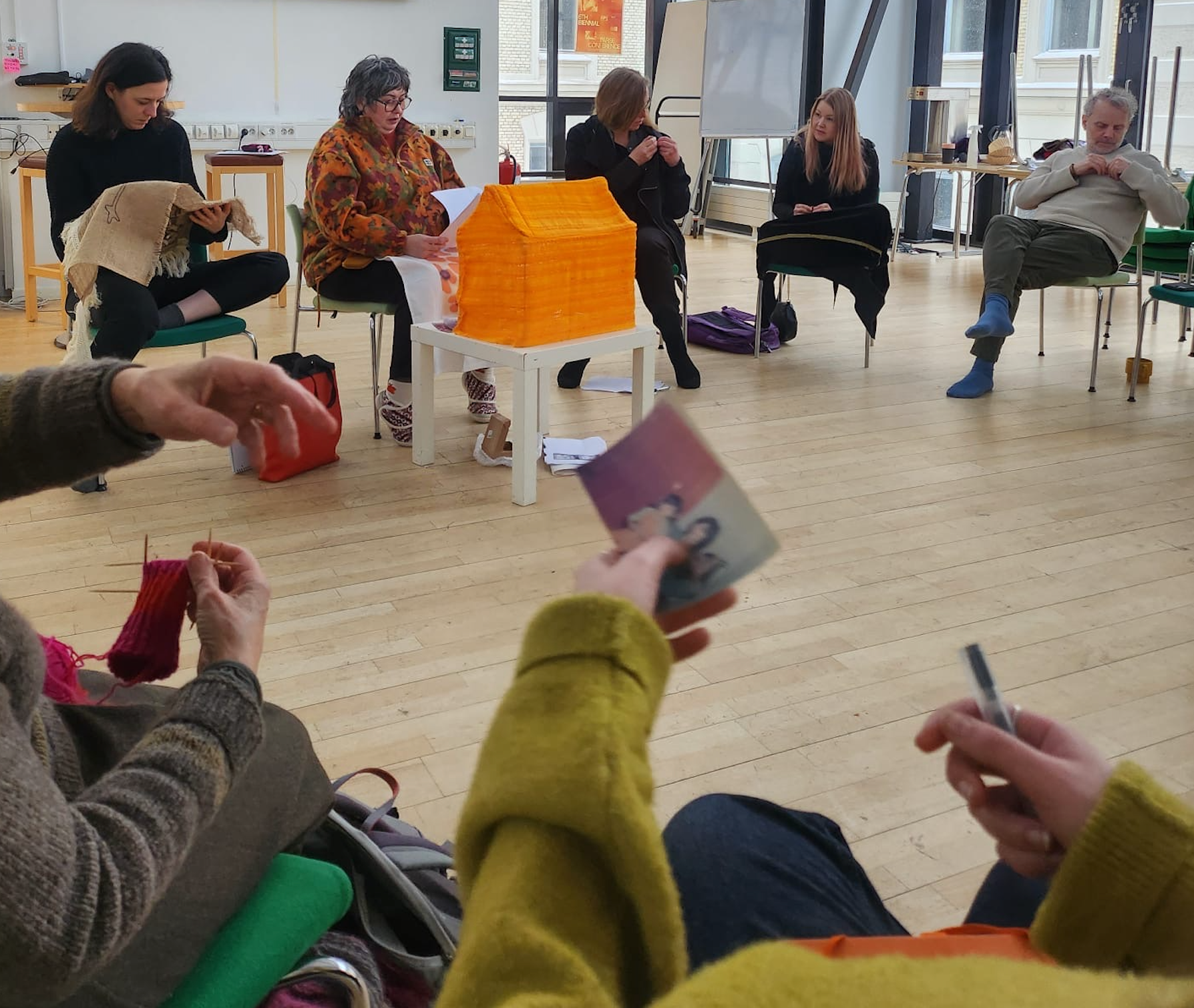
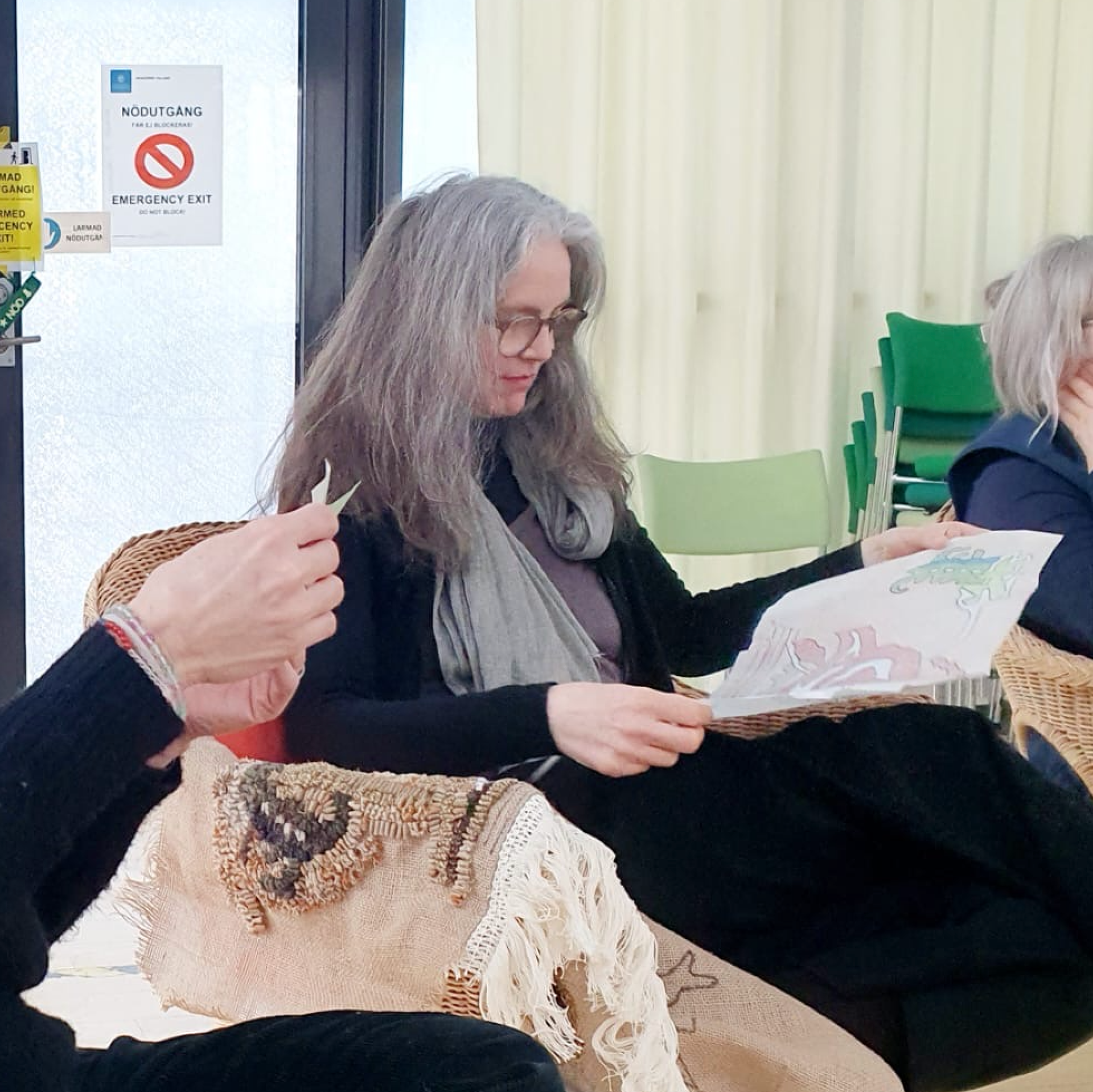
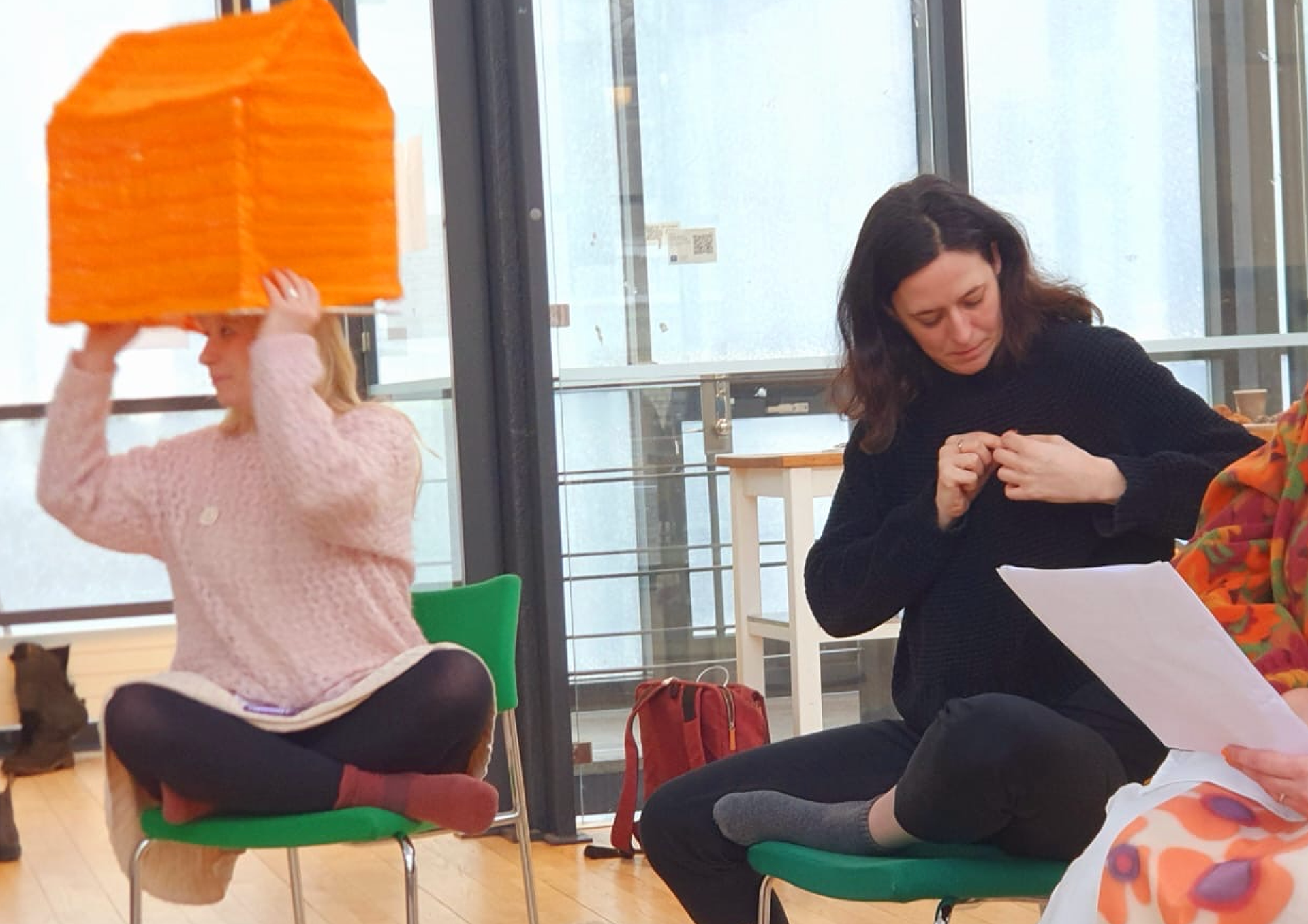
This work was taken to the NSU (Nordic Summer University) The aesthetics of Decolonization: Arts, Memory, and Ecological Justice Winter symposium in Gothenburg to form a temporary and fleeting ‘exhibition’ through short performance, presentation and handling of small art works.
Act 1: The Carpet
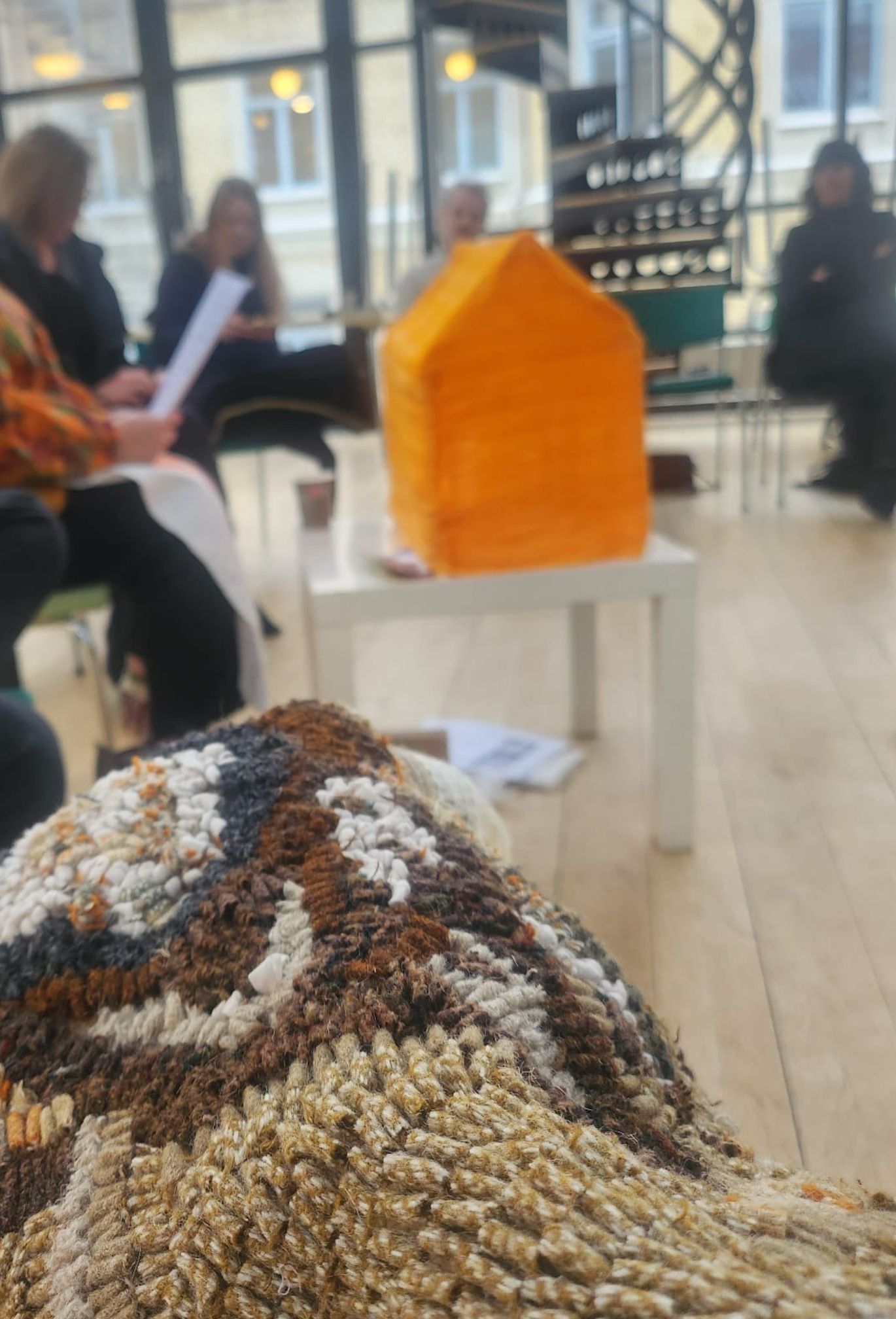
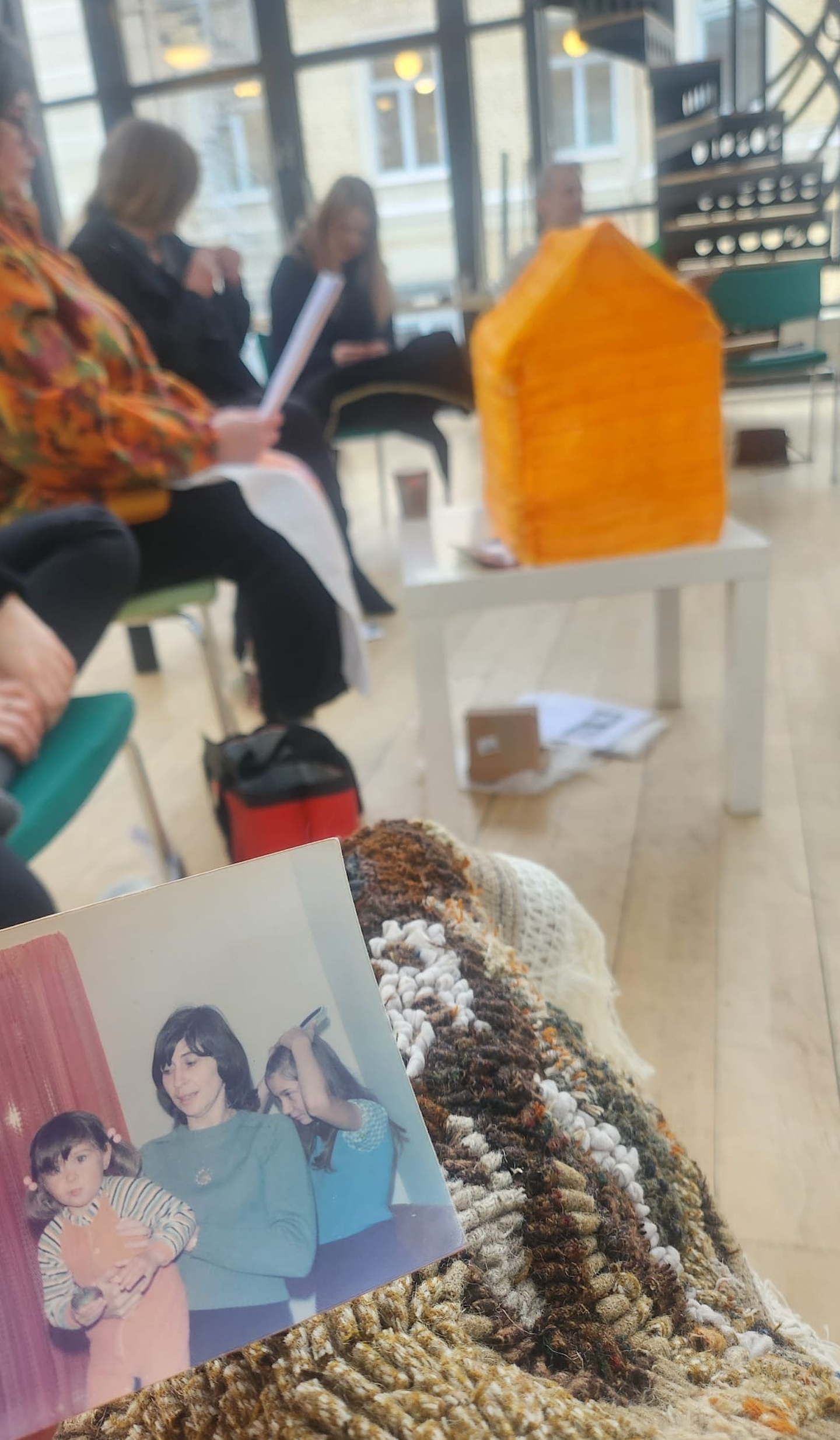
My own rendering of the pattern, scaling it up from several photographs took time, and I used that time to try and remember it, how short was the pile? What colours was it? Did it have a label? Reversing an image search came up with hundreds of generations of ‘oriental’ rugs, Turkish, Persian, Iranian, floral, traditional hand knotted, woven but nothing that looked the same. Maybe a British brand like Axminster? This and many companies like them churning out ‘oriental’ ‘style’ floorings.
It was in my study of it, drafting bits of the design and creating my own version (being passed around) that I could reflect deeply on its origins. I used the technique of rug hooking, cutting strips of wool fabric that I pulled loops through the hessian backing. The technique was far removed from the hand knotted or woven one I grew up with. It was slow making and with every poke of the sharp hook and wrestle with the strips of wool fabric beneath I thought about the carpet more and then started to also think about the technique I was using to explore it. Some sources claim that hooking was a tradition from 19th century, predominantly Northern British towns, but actually hooking woollen loops thorough the base fabric is evident in Viking artefacts, wider Europe and North America. Using leftover scraps, a ‘craft of poverty’.
Making the textile piece gave me many moments to consider the floor surfaces that had been in the family home perhaps bought for their quality, the style desired in the 1970s or maybe a second hand find.
The carpet is actually a rug which was large enough to almost go wall to wall in the five metres by five metres front room. There was also a similar patterned rug in the adjoining dining room which at the threshold of the doorway, the fringes from each, if they were more well behaved, could almost touch, but the cotton fringing was curled to the edge of the rug like a clenched fist scrunched up from the vacuum cleaner. Underneath the rugs was a wall to wall fitted short pole carpet in 1970s brown. The rug atop the carpet was an expansive play area, lined around the edges with sofa, matching chairs, coffee table, side table, and large stereo speaker. The rug looks like it travelled from another place, perhaps several other houses. Its pattern varied and clear, the oriental rug had its own borders, central pattern and flourishes that linked the two. It appears almost like magic in every childhood photograph from 1975 to 1981. Being a young child my encounters with it were close up, there in my periphery, even when standing, also sometimes close up to my face when sprawled on the floor zooming cars around or building Lego box houses like the one I was in. The rug was sometimes an imagined landscape. I think it travelled with us or was put in storage but I can't place it anywhere else. I need to look deeper into the archive of photographs to see if I can trace the rugs, their existence beyond 28 Moriston Road. Perhaps create a map of their last sightings. I saved this piece of writing until I was on my flight to Gothenburg and as I look out the window at the expanse of clouds that look like lumpy polyester stuffing from a duvet, I imagine, as I might have once done, being on the rug, it taking off and flying above like a magic carpet from Aladdin.
Act 2: The Cups
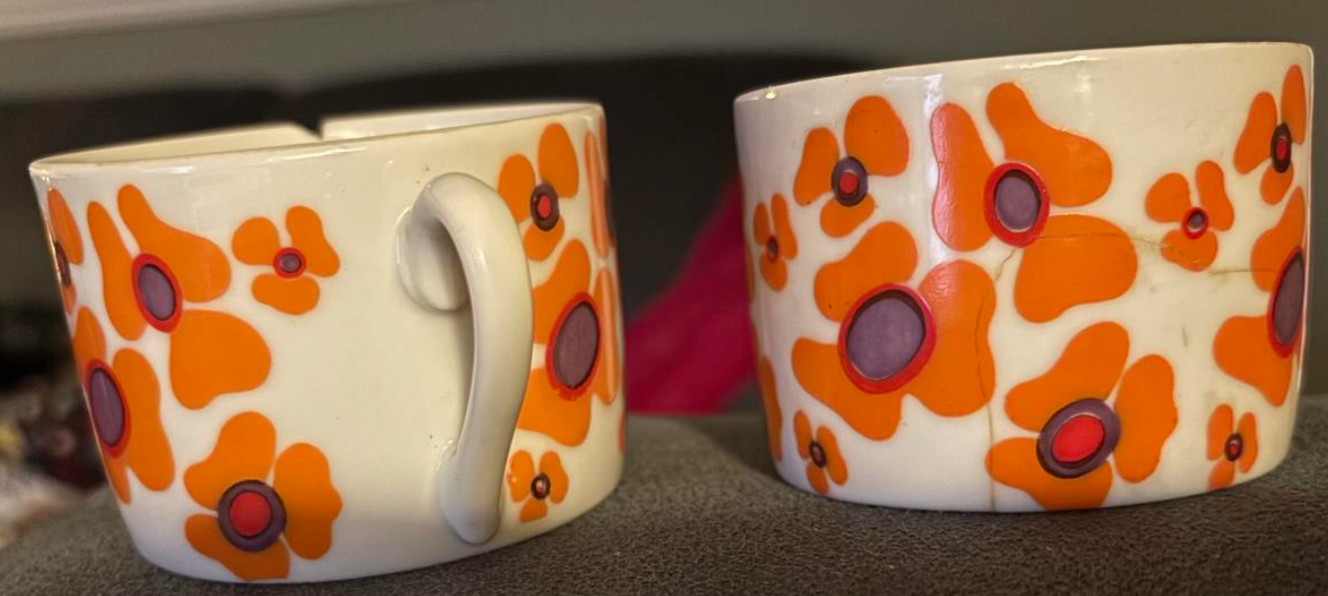
The cups have followed me from one address to another, gradually becoming more fragile and chipped. Three months pregnant with me, my parents went on their honeymoon to Amsterdam in March 1973. I was there yesterday momentarily while waiting for my connecting flight.
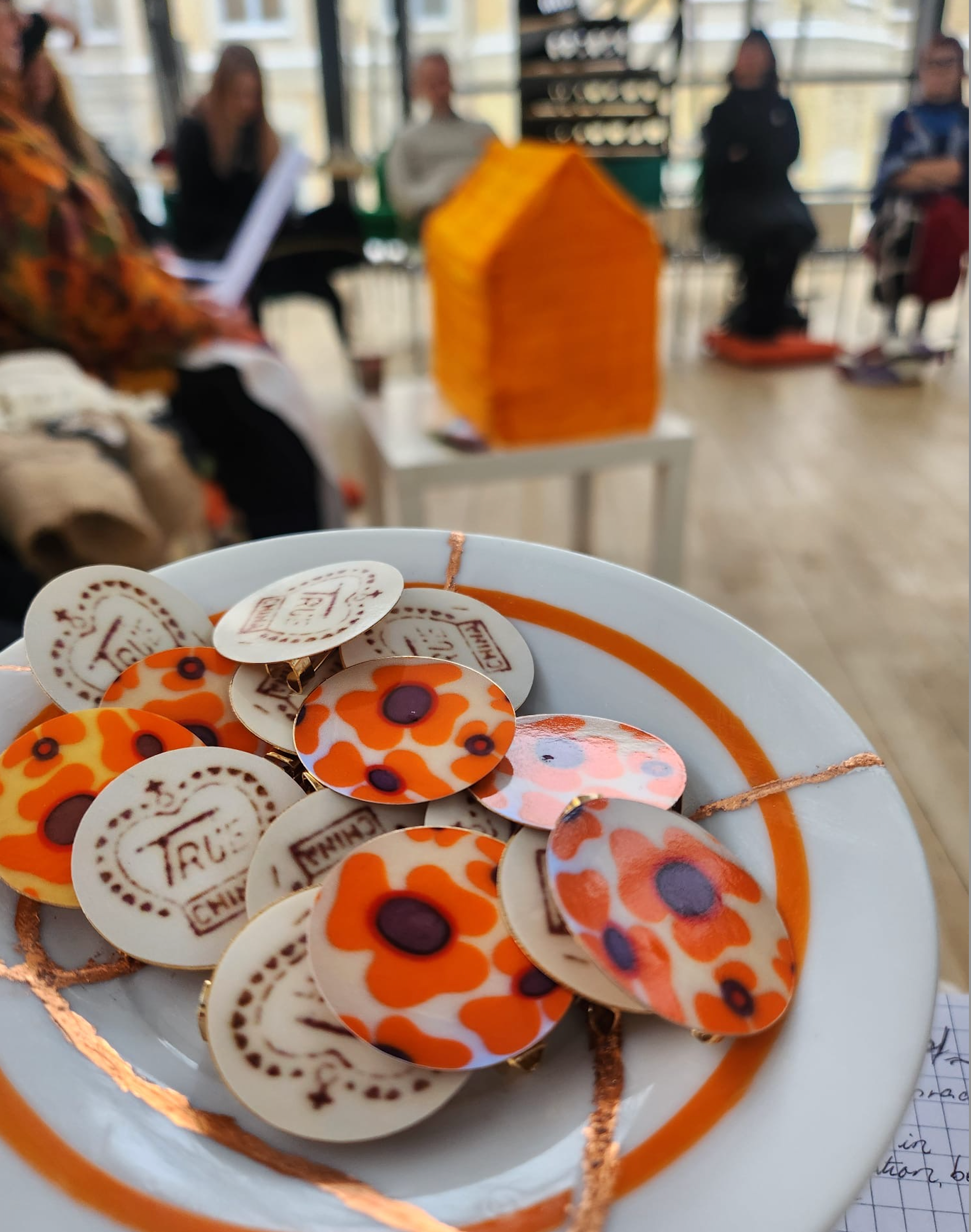
These cups and saucers were bought while on their honeymoon, and I only ever remember them behind glass or in a kitchen cupboard, not used. They have become strange objects in their poor repairs and disrepair but I can’t let them go. Partly because they are so garish and partly because I have always taken them with me, I think since I left home at 16. A souvenir of a marriage even when it ended.
I started to think about them in the home as they were intended, souvenir coffee cups from an international trip. An identifying mark beneath each cup TRUE China inside a crown. But china as in porcelain and I discover in my quest to find out what they really are: They are likely to be a 1970s export from the Japanese Noritake & affiliated companies, in 1970 Noritake UK was established. The export market dictated more contemporary designs which included Scandinavian inspired imagery and bold floral designs. The Morimura brothers (Toyo and Ichizaemon) had taken the business as far as New York in 1876 for imports of chinaware.
China’s dominance as a primary producer of porcelain led to ‘china-ware’ the most delicate of ceramics. But the name of the country China was originally known as ‘Middle Kingdom’ or ‘Central State’ The English name China comes from 16th century Portuguese, borrowed from Middle Persian and traced back to the Sanskrit work ‘Cina’ – there are several etymologies. So True China was a marketing device that brought new products to a European market in the 1970s by a Japanese company.
The cup has become a new work, it signifies the complexities of objects we grow up with, that follow us through life and it has hopefully become something else. An artwork – please take your own souvenir of this piece as the repaired saucer is passed around. ‘true China’ can be worn ironically, symbolically but with an understanding that we have tried to untangle its existence and meaning.
Act 3: The Curtain
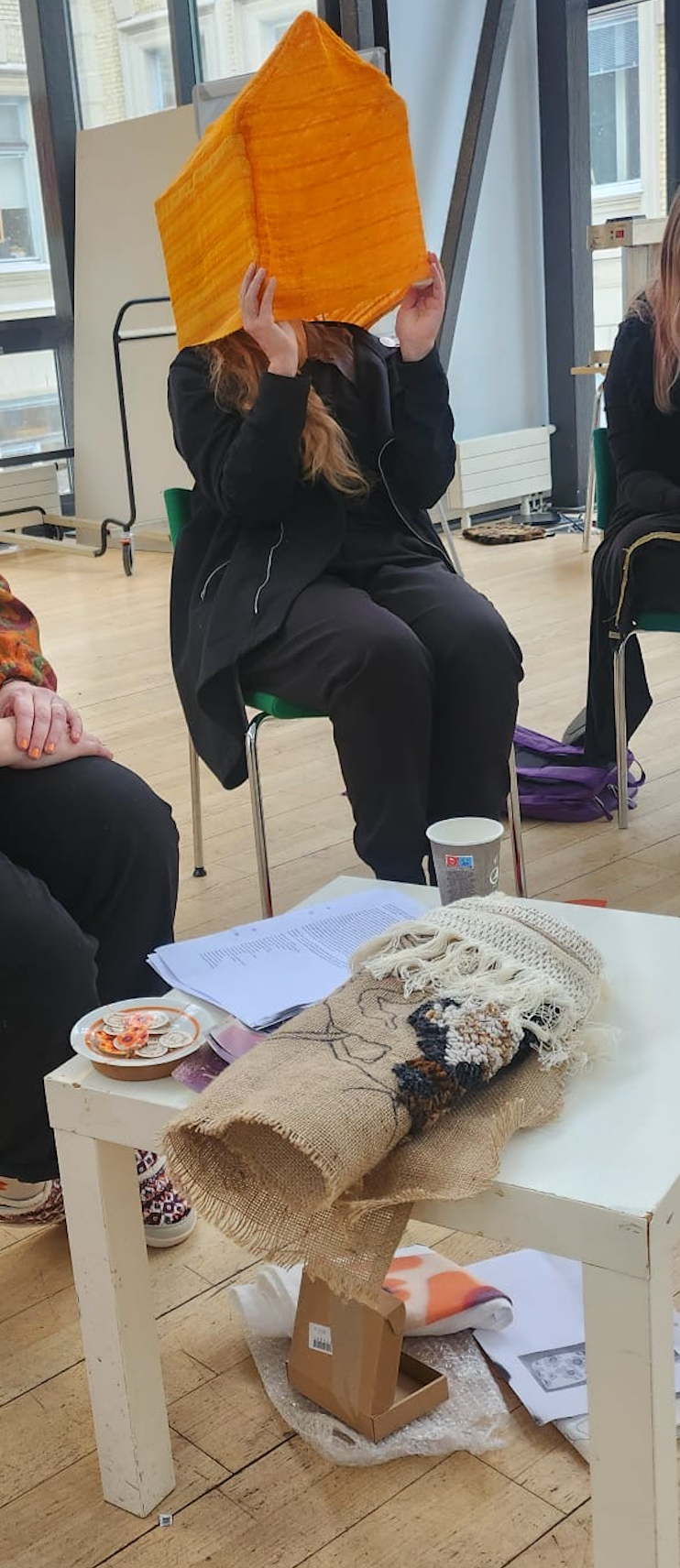
A floor length pair of thin orange curtains, like the oriental carpet appear in many childhood photographs between 1977 and 1980. I remember how they would let the morning light through before anyone else was awake, a bright hazy orange glow lighting up the room or in late afternoon a warmer glow reflecting on the wall as the sun was moving. The orange curtains didn’t follow me but I found some on eBay several years ago that looked just like I remembered them.
I mentioned COU- GEN at the beginning of this work – It describes poring through a dated set of encyclopaedias as a young child – the images represented outdated imagery, interpretations, thoughts and ideas of the world, exoticised, misrepresented, misogynised and alienated people and cultures – othering them. There is a section that describes the curtained window though:
COU-GEN
It is 1977 in the suburbs of Bedfordshire a quiet cul-de-sac a barren landscape that you enter that can’t escape
short flat dried out grass future gardens front and back odd shaped turf between pavement and road trees and shrubs in their infancy
repetitive pale flat bricks and Lego style window frames that look sucked into place flush and taught Tarmac concrete curbs and low brick walls to trip up, graze knees on, and dog shit to tread in
Each house in Moriston Road nearly identical made different on the outside by the car on the driveway and the net curtains at the windows
A three bedroom semi detached built maybe 10 years earlier
Inside number 28 through the front door a different empty landscape of plain and polished surfaces narrow skirting and wall to wall fitted short pile carpet
A hall table, glass top with script like legs of white metal, a leftover from the 60’s. Plinth like it presents a red telephone with tight curly wire and round dial inviting small fingers to turn over the black numbers heavy and forbidden.
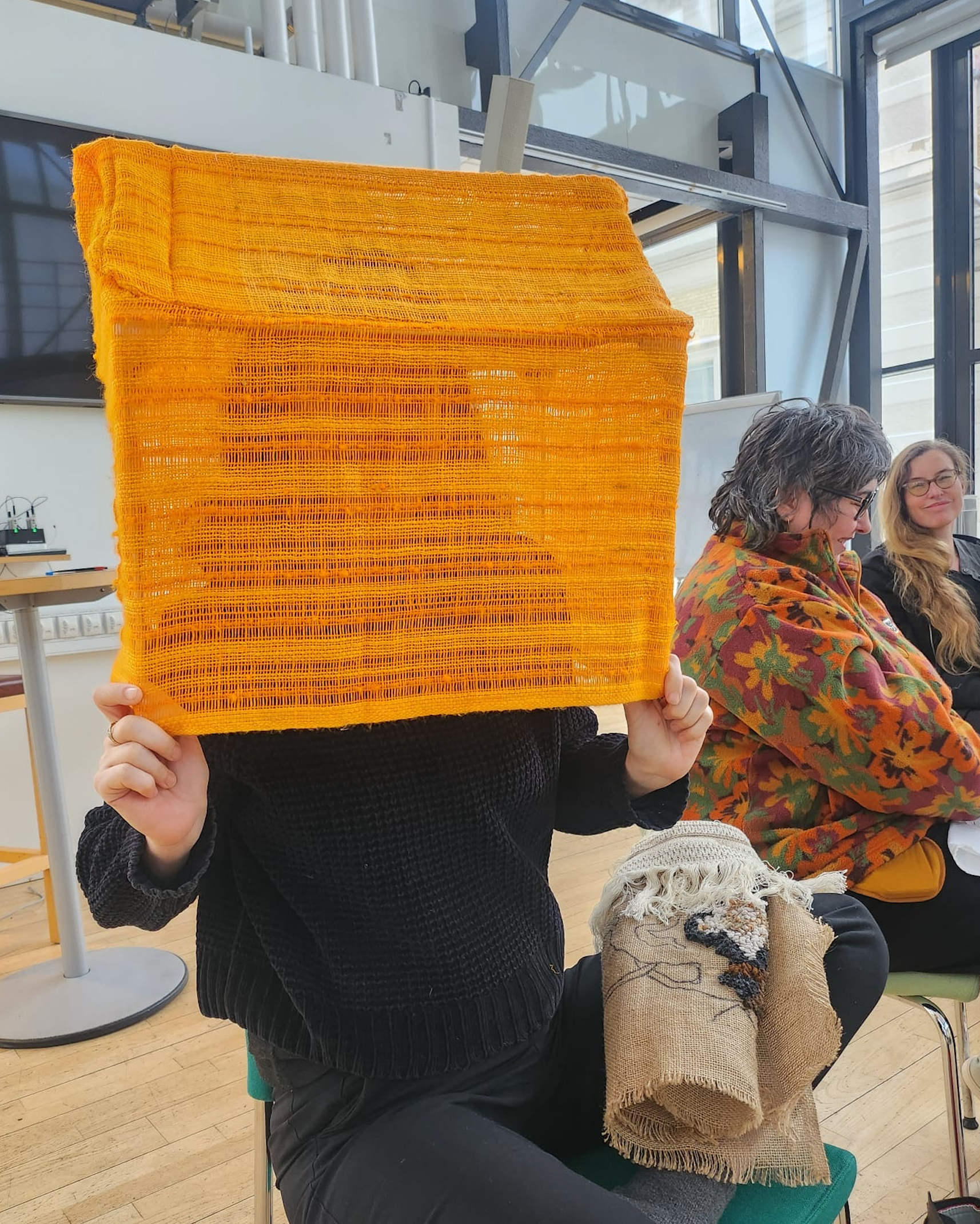
Into the lounge, front room, sitting room a low chocolate brown three piece suite, short pile on wheels the colour of parcel tape that look too small for it, set back against the wall of slightly stringy striped wallpaper, a non-colour, sunburnt orange curtains, thin and the visible woven threads hang ceiling to floor letting in the light even when they are closed layered over net curtains created out of opaque and transparent oval shapes, allowing the outside in but not the inside out.
The curtains glow and breathe into the room cutting through the beiges, browns and green. There is a reddish brown sideboard narrow with sliding glass doors, a souvenir from a school trip, pale spider plant seated on a crocheted mat and a thick heavy glass ashtray. Sliding open the doors a set of encyclopaedia’s printed some 20 years prior, volumes lined up spines curving outwards heavily bound blue and white textured vinyl to look like leather.
A random choice reveals pages of images and type, words faded black-and-white pictures that are difficult to distinguish as either photographs or illustrations sitting alongside scientifically labelled diagrams and handed colour plates images of countries flags paintings from museums pictures of bicycles sitting alongside illustrations of cuttlefish.
Heavy in small hands sat cross legged on the patterned rug the book is wedged open, thighs becoming a resting place for the front and back of the book where it leaves it imprint of the gravelly texted vinyl warming the skin.
The blurs of small letters make patterns and shapes, images are inviting and ambiguous, fuzzy and other worldly. Colours show things people and places from history and the future. The pages smell like coal and soot and a lack of air over time. Pages have a weight to them, slightly slippery and trying to pull away from the spine.
East Indies, Cologne, Ebony, Echo, Eclipse an image of when the Sun is eclipsed by the moon.
From the imagination shapes and forms emerge from smudges and suggested marks perhaps drawn, painted or printed, grainy and dusty, welcoming and strange world beyond the front room, the hallway, the front garden, pavement and curb, the world beyond the cul-de-sac, Bedfordshire and 1977.
Moving home, taking some things, leaving some behind: I have moved home 23 times (21 unique addresses) – Please pass the house around as I read these addresses – I encourage you to immerse yourself in the piece, literally, to experience something of what I did in 1977.